Home / News and Articles / Self-employed
Self-employedSelf-employed and 1099 taxes: the complete guide for 2026 returns.
By Jane Bono · Published · 12 minute read
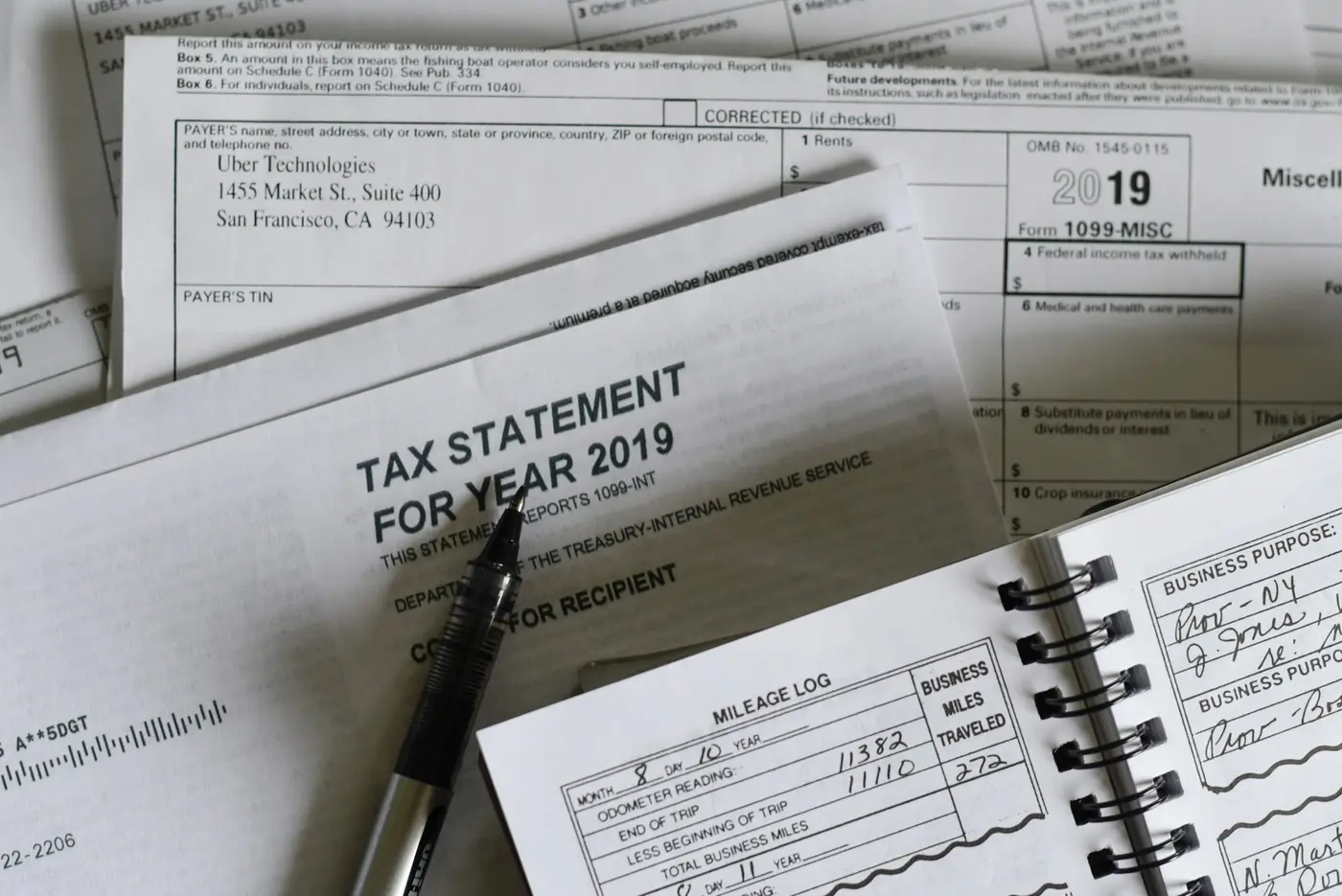
Cleaners, contractors, stylists, drivers, consultants, food vendors: more of our East Dallas clients work for themselves every year. Being your own boss changes your taxes in three big ways. Nobody withholds tax for you, you pay both halves of Social Security and Medicare, and every legitimate cost of earning your income becomes a deduction. This guide walks through all of it for the 2026 tax year, with a worked example and charts.
Are you self-employed?
If you are paid as an independent contractor rather than an employee, you are self-employed for tax purposes. Signs include receiving a Form 1099-NEC or 1099-K instead of a W-2, choosing your own hours and methods, and paying for your own tools. It does not matter whether the work is full-time or a side job, or whether you have registered a business name. A single-member LLC is also taxed this way unless it elects otherwise.
You report self-employment income on Schedule C, attached to your Form 1040. If your net earnings from self-employment are $400 or more, you generally must file a return and pay self-employment tax, even if your income is otherwise too low to owe income tax.
The forms you may receive in 2027
| Form | When you get it for 2026 |
|---|---|
| 1099-NEC | A business paid you $2,000 or more for services (the threshold was $600 before 2026) |
| 1099-K | A payment app or card processor paid you more than $20,000 across more than 200 transactions |
| 1099-MISC | Rents, prizes and certain other payments |
| None | Cash, Zelle or app payments below the thresholds. Still taxable. |
The thresholds decide who must send you a form, not what is taxable. All self-employment income must be reported. Keeping your own record of every payment is the only way to be sure the return is complete and to avoid a CP2000 letter later.
Self-employment tax: the part that surprises people
Employees split Social Security and Medicare with their employer: each pays 7.65%. When you work for yourself you pay both halves, a total of 15.3%: 12.4% for Social Security (up to the annual wage limit) and 2.9% for Medicare. It is calculated on 92.35% of your net profit, and you can deduct half of it when working out your income tax.
Source: IRS Schedule SE instructions
Self-employment tax applies even when your income tax is low or zero. That is why someone with a modest profit, children and credits can still owe at filing time. It is also why every deduction you can support matters twice: it lowers both income tax and self-employment tax.
Worked example: $40,000 of profit
Luis is single and drives, delivers and does small handyman jobs. After expenses, his 2026 Schedule C shows a net profit of $40,000. He has no other income and takes the standard deduction. Rounded figures:
- Self-employment tax: $40,000 × 92.35% × 15.3% = about $5,652
- Half of it is deductible: about $2,826, leaving adjusted gross income of about $37,174
- Minus the $16,100 standard deduction: $21,074
- Qualified business income deduction (20% of the smaller of his business income or taxable income): about $4,215
- Taxable income: about $16,859
- Income tax: 10% of $12,400 plus 12% of $4,459 = about $1,775
About 18.6% of his profit, and most of it is self-employment tax. Before any credits.
Luis's total is about 18.6% of his profit. If he had not tracked $8,000 of legitimate expenses, his profit would have been $48,000 and his tax roughly $1,700 higher. Records are money.
Deductions most self-employed people can claim
A cost is deductible if it is ordinary and necessary for your kind of work. These are the ones we see most:
- Vehicle: the standard mileage rate (72.5 cents a mile for 2026) or the business share of actual costs. Commuting to a regular workplace does not count, but driving between jobs and clients does.
- Phone and internet: the business-use percentage.
- Tools, equipment and supplies: many can be deducted in full in the year bought.
- Home office: if part of your home is used regularly and only for business. The simplified method allows $5 per square foot, up to 300 square feet ($1,500).
- App and platform fees: service fees the platform kept from your gross earnings.
- Advertising, website, business cards and software.
- Health insurance premiums for you and your family, if you are not eligible for an employer plan.
- Retirement contributions: a SEP-IRA or solo 401(k) can shelter a large share of profit.
- Professional fees: bookkeeping and the business part of tax preparation.
- Business meals: generally 50% deductible when business is discussed.
At 72.5¢, 15,000 business miles is a $10,875 deduction.
Source: IRS standard mileage rate announcements
Paying as you go: quarterly estimated taxes
Because nothing is withheld, the IRS expects self-employed people to pay during the year. If you expect to owe $1,000 or more, make estimated payments by April 15, June 15, September 15 and January 15. You avoid an underpayment penalty if you pay at least 90% of this year's tax or 100% of last year's tax (110% if your income was over $150,000), spread across the quarters.
A simple habit: move 25% to 30% of every payment you receive into a separate savings account, and pay the IRS from it each quarter at IRS.gov/payments. Luis's 18.6% shows why 25% is usually comfortable. Read more in estimated tax payments: who pays and when.

Records the IRS expects
- A record of every payment received: invoices, app summaries, bank deposits.
- Receipts or invoices for expenses, saved as photos or PDFs.
- A mileage log kept at the time: date, start and end point or purpose, and miles.
- A separate bank account or card for the business, so personal and business spending do not mix.
- Keep records for at least three years after filing; longer for equipment and vehicles.
If a spreadsheet suits you better than an app, our Schedule C tracker sorts income and expenses into the same lines as the IRS form.
Mistakes we fix every season
- Reporting only the income that came on a 1099 and forgetting cash or app payments.
- Reporting the 1099-K gross without subtracting platform fees, refunds and expenses.
- Claiming both mileage and gas for the same vehicle.
- Deducting personal spending because it went through the business card.
- Skipping estimated payments, then facing a large bill and penalty in April.
- Not filing because “I didn't make much”. Net earnings of $400 or more require a return.
When to consider an LLC or S corporation
An LLC gives legal separation but does not change your federal taxes by itself. An S corporation election can reduce self-employment tax once profit is high enough to justify a reasonable salary through payroll and the extra filings. For most people starting out it is not worth it; it is a decision to model with numbers, not one to make because someone on social media said so. See our small business tax guide.
Health insurance and retirement: the big two
Two deductions do more for self-employed people than almost anything else. If you buy your own health insurance and are not eligible for a plan through an employer or a spouse's employer, the premiums for you, your spouse and dependents are usually deductible, up to your business profit. And contributions to a retirement plan such as a SEP-IRA or a solo 401(k) can reduce income tax substantially while building savings. The limits are generous and depend on your profit, so we calculate them at your appointment.
Credits still apply
Being self-employed does not stop you from claiming family credits. Your net self-employment earnings count as earned income for the Earned Income Tax Credit and the refundable Child Tax Credit. That is one reason to report all of your income accurately: underreporting can reduce credits as well as create a tax problem. See our family tax credit guide.
What to bring to your appointment
- Every 1099-NEC, 1099-K and 1099-MISC, plus the annual summaries from each app or platform.
- Your own total of cash and app payments that did not come with a form.
- Bank and card statements for the business account.
- Your mileage log, and receipts for vehicle costs if you use actual expenses.
- Receipts for equipment and supplies, with purchase dates.
- Home office measurements and household bills, if you use part of your home.
- Health insurance statements and any retirement contributions.
- Dates and amounts of estimated tax payments made.
The full list is in our documents checklist.
Common questions
I only made a little on the side. Do I need to report it?
Yes. All income is taxable, and if your net self-employment earnings are $400 or more you must also pay self-employment tax.
Can I deduct my car payment?
Not the payment itself. You deduct either the standard mileage rate or the business share of actual costs, which include depreciation, and for some new vehicles you may also qualify for the new car loan interest deduction.
I have a W-2 job and a side business. How does that work?
Both go on the same return. Your W-2 withholding counts toward the total, and you can raise it on a new W-4 instead of making estimated payments.
What if I cannot pay what I owe?
File on time anyway, because the penalty for not filing is much larger than the penalty for not paying. Then set up a payment plan. See owe the IRS?
Self-employed and want it done right? See our business and self-employed tax service, book a free consultation or call 972-686-1005. Figures are rounded for illustration; this article is general information, not tax advice for your situation.
This article is general information, not tax advice. What applies to you depends on your situation.
Need help with this?
Your first consultation is free.
 Tax Deadlines and Updates2026 federal tax brackets explained, with examples and charts.
 Tax Deadlines and UpdatesThe new tax law: what changes on your 2026 tax return.
 Individual Tax TipsDocuments needed for tax preparation: the complete checklist for 2027.