Home / News and Articles / Self-employed
Self-employedUber, Lyft and DoorDash driver taxes: the complete deductions guide.
By Jane Bono · Published · Updated · 11 minute read
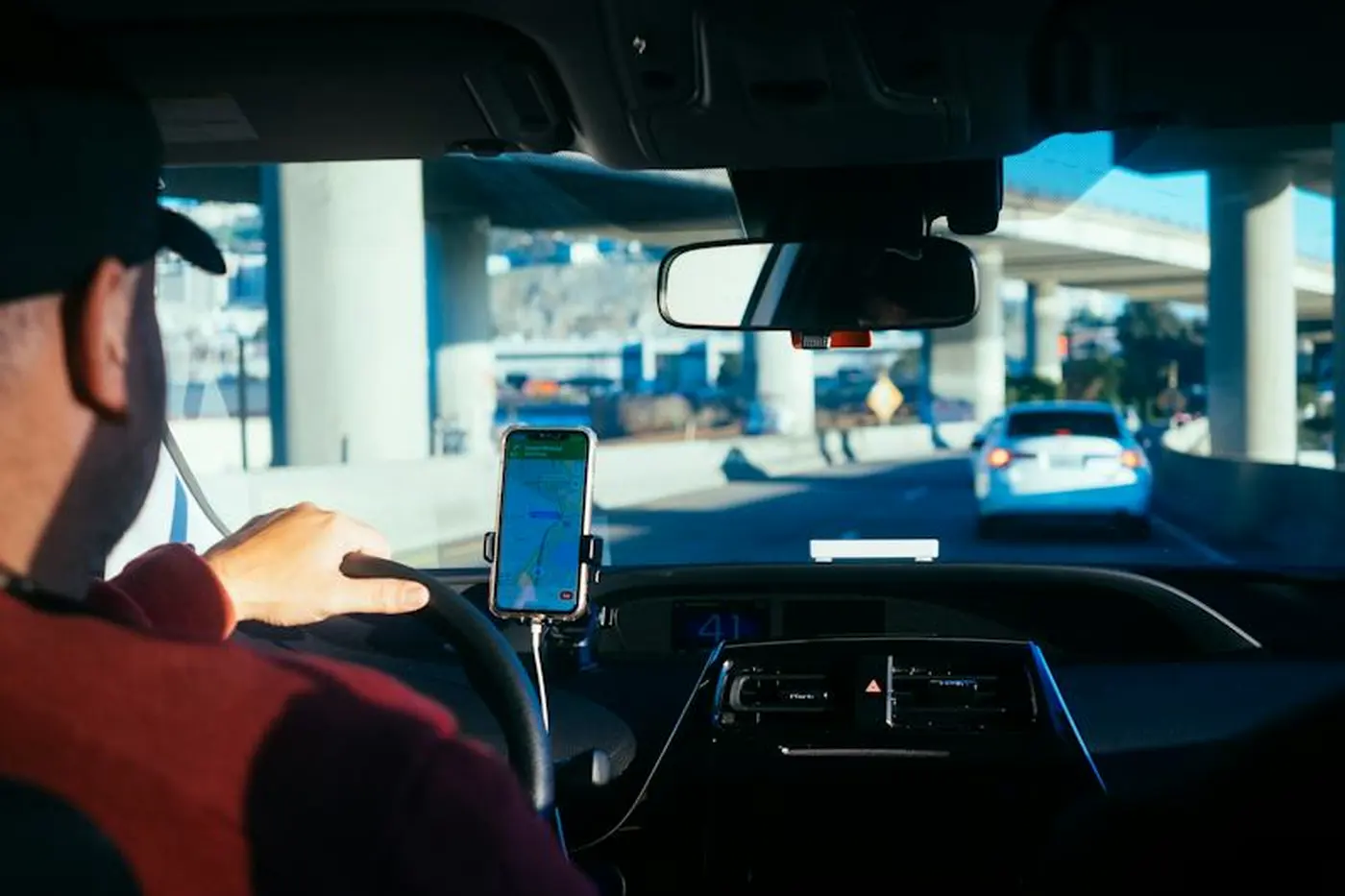
If you drive for Uber, Lyft, DoorDash, Instacart, Uber Eats or Amazon Flex, you are running a small business. You are taxed on your profit, not on what the app paid out, and the difference is mostly your car. Drivers who keep good records often pay a fraction of the tax of drivers who do not. This guide covers the forms you will receive, every major deduction, and a worked example showing why the mileage log is worth so much.
You are self-employed
Rideshare and delivery apps treat drivers as independent contractors. Nothing is withheld from your pay, you report income and expenses on Schedule C, and you pay self-employment tax (15.3%) on your net profit in addition to income tax. If your net earnings are $400 or more, you must file. Our self-employed tax guide explains how this works in general.
The forms you will see
| Form | What it shows |
|---|---|
| 1099-K | Gross payments processed for you, if you pass the threshold (more than $20,000 and 200 transactions) |
| 1099-NEC | Other payments, such as bonuses or referrals, of $2,000 or more for 2026 |
| Annual tax summary in the app | Gross fares, fees the app kept, tips, and miles while online. Your most useful document. |
Start from the gross figure, then subtract the service and booking fees the app kept: they are a business expense. Tips are part of your income; the new tips deduction may apply to some delivery and rideshare tips, subject to its rules. Even if you receive no form, all of your earnings are taxable.
Your car: standard mileage or actual costs
Your vehicle is usually your biggest deduction. You can choose one of two methods for each car:
- Standard mileage rate: business miles × 72.5 cents for 2026. It covers gas, maintenance, repairs, insurance and depreciation. Parking, tolls and car loan interest for the business share are added on top.
- Actual costs: the business percentage of gas, oil, repairs, tires, insurance, registration, car washes, lease payments or depreciation. It takes more records and suits expensive or high-cost vehicles.
If you want the flexibility to use the standard rate, choose it in the first year you use the car for business. Switching later has restrictions.
Every 1,000 business miles you can prove is a $725 deduction.
Source: IRS 2026 standard mileage rate
Which miles count
- Miles driven with a passenger or order on board.
- Miles driving to a pickup after accepting a trip.
- Miles driving between trips while the app is on and you are available for work, which many drivers forget.
- Trips for car maintenance, supplies or to the app's hub.
Driving from home to the area where you start working is treated carefully; record it and ask us how it applies to your pattern. Personal trips with the app off do not count.
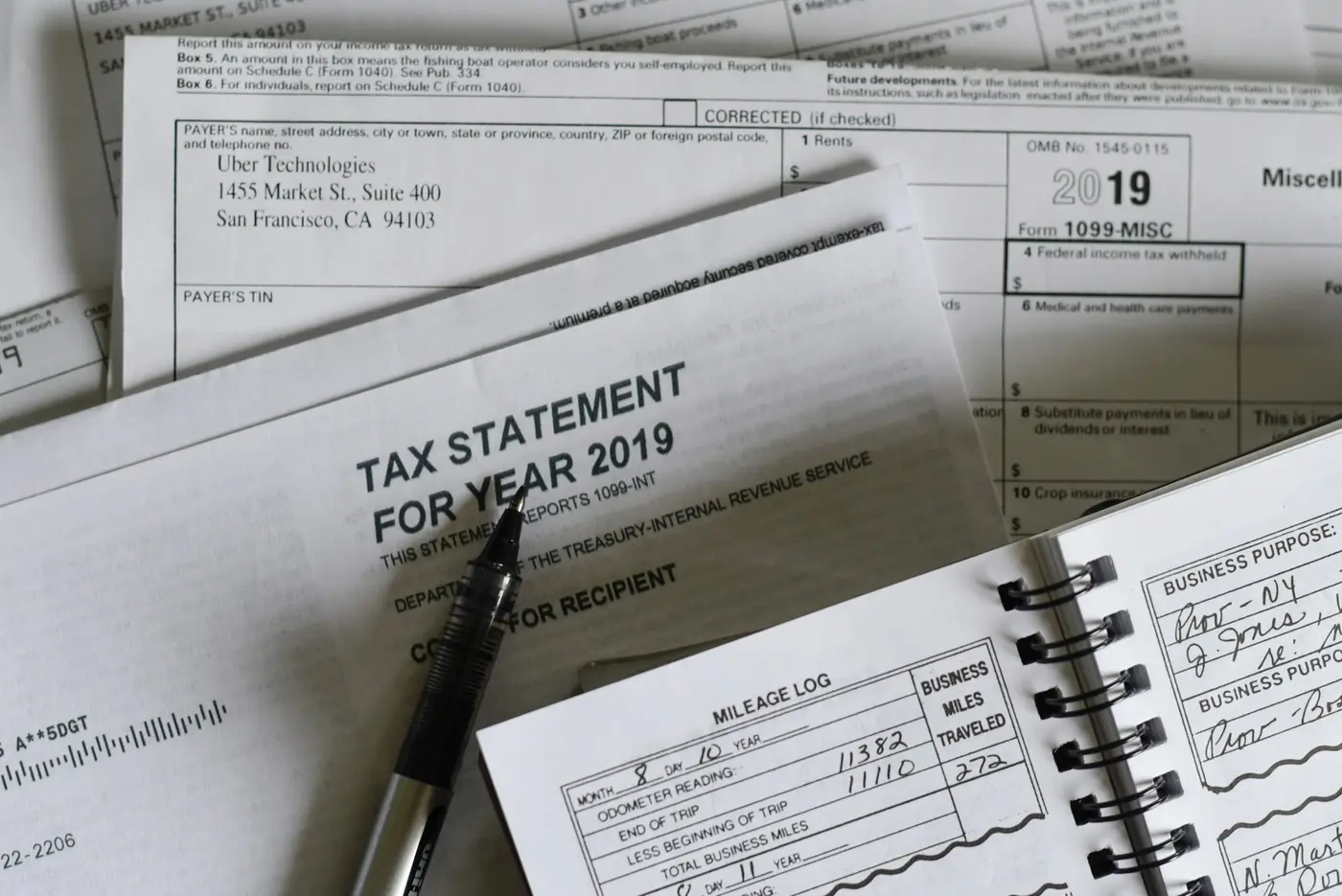
The IRS expects a record made at the time: date, purpose and miles. The app's “miles online” summary helps but usually undercounts the miles between trips. A free mileage app, or writing your odometer reading at the start and end of each shift, is the best proof you can have.
Deductions drivers often miss
- Service fees, booking fees and commissions the app kept
- Tolls and parking while working (deductible even with the standard mileage rate)
- The business share of your phone and data plan
- Phone mounts, chargers, cables and dash cams
- Insulated bags, coolers and hand trucks for delivery
- Water, mints and other rider amenities
- Car washes and cleaning supplies (actual-cost method)
- Roadside assistance and the business part of rideshare insurance (actual-cost method)
- Health insurance premiums, if you are not eligible for an employer plan
- Fees for the tax preparation of your Schedule C
Worked example: why records matter
Andre drove full-time for two apps in 2026. His app summaries show $35,000 of gross earnings, of which the apps kept $7,000 in fees. He drove 20,000 business miles and spent $600 on his phone plan's business share and $400 on supplies. These are illustrative figures.
Without records, Andre could be taxed on far more than $12,500.
On a $12,500 profit, Andre's self-employment tax is about $1,766 (12,500 × 92.35% × 15.3%). If he had reported the $35,000 gross with no deductions, his self-employment tax alone would be about $4,946, before income tax. The difference, more than $3,000 in self-employment tax, comes almost entirely from keeping a mileage log and reading the app summary properly.
Quarterly estimated taxes
Because the apps withhold nothing, plan to pay estimated taxes on April 15, June 15, September 15 and January 15. A simple rule many drivers use: set aside 20% to 25% of each week's net earnings in a separate account. If you also have a W-2 job, you can raise your withholding there instead. See estimated tax payments.
Common mistakes
- Reporting the 1099-K gross as profit without subtracting fees and expenses.
- Not counting miles between trips.
- Claiming both the mileage rate and gas for the same car.
- Forgetting income from a second app that did not send a form.
- Not filing because a 1099 never arrived.
- Rebuilding the mileage log from memory in April. It is weak evidence if the IRS asks.
A five-minute weekly records routine
- Start each shift by noting your odometer reading, or turn on a mileage app.
- End each shift with the odometer reading and the apps you used.
- Once a week, download or screenshot each app's weekly earnings summary.
- Photograph receipts for tolls, parking, supplies and repairs; save them in one folder.
- Move 20% to 25% of that week's net earnings into a separate tax savings account.
That routine is enough to support your deductions if the IRS ever asks, and it makes tax time quick.
Driving for more than one app
Many drivers run two or three apps at once. Report all of them on one Schedule C if it is the same activity. Miles are counted once: a mile driven with both apps on is still one business mile. Keep each app's summary, because each may send its own form, and the IRS matches every one.
Renting or leasing a car to drive
If you rent a car through a rideshare rental program, the business share of the rental cost is deductible under the actual-cost method. With a weekly rental used only for driving, that can be a large deduction. You cannot use the standard mileage rate and deduct rental payments for the same car; pick one method and keep the rental agreements.
What to bring to your tax appointment
- Annual tax summaries and any 1099-K or 1099-NEC from every app.
- Your mileage log or app mileage report.
- Receipts for tolls, parking, phone, supplies and car costs.
- Estimated tax payments made, with dates.
- Last year's return, if we did not prepare it.
Insurance, tickets and accidents
Rideshare insurance or a commercial endorsement is part of your vehicle costs: under the actual-cost method you deduct the business share, while the standard mileage rate already includes insurance. Traffic and parking tickets are never deductible, even if you got them while working, because fines paid to a government are excluded by law. Accident repairs not covered by insurance are part of actual costs, and with the standard mileage rate a casualty loss may be treated separately; ask us if you had an accident during the year.
Taking a break from driving
If you stop driving partway through the year, report what you earned up to that point and keep the records. If you sold or traded the car you used, tell us: depreciation built into the mileage rate or claimed under actual costs affects the gain or loss on the sale.
Common questions
Do I pay tax on my tips?
Tips are income. For 2025 to 2028 there is a new deduction for qualified tips, up to $25,000 with income limits, which may apply to some rideshare and delivery tips. Keep the tip totals from your app summary.
Can I deduct my car payment?
Not the payment itself. Use the mileage rate, or actual costs including depreciation. Interest on a loan for a qualifying new US-assembled car may also be deductible under the new car loan interest rules.
I received a CP2000 letter about my 1099-K. What now?
The IRS likely counted gross payments without your expenses. Respond with your records by the deadline. See IRS letters explained.
Do you help drivers outside Dallas?
Yes, by phone, video and WhatsApp. See online tax preparation.
Drive for an app? See our self-employed tax service, book a free consultation or call 972-686-1005. Our Schedule C tracker includes a mileage log. Figures are illustrative; this article is general information, not tax advice for your situation.
This article is general information, not tax advice. What applies to you depends on your situation.
Need help with this?
Your first consultation is free.
 Tax Deadlines and Updates2026 federal tax brackets explained, with examples and charts.
 Tax Deadlines and UpdatesThe new tax law: what changes on your 2026 tax return.